

What Is Compressed Air Quality Testing?
Compressed air quality testing identifies contaminants in compressed air, including particles, water, oil, and microorganisms, that can compromise product quality, system reliability, regulatory compliance, and the overall manufacturing process. Contaminants can enter through the air compressor itself, distribution piping, storage tanks, or inadequate filtration.
Ingersoll Rand, in partnership with Trace Analytics, LLC, provides compressed air and gas quality testing to ISO 8573 standards, or to your facility's custom specification, helping you verify air purity, support certification and audit requirements, and protect your operation with reliable compressed air contamination testing.
Why Test Compressed Air?
Protect Your Investment
Regular air quality testing helps protect compressors, production equipment, and finished products from costly contamination.
Monitor Trends Over Time
Recurring testing supports trend analysis, helping you track air quality and plan maintenance before problems occur.
Support Compliance Requirements
Testing helps meet certification and audit requirements from bodies such as FDA, SQF, BRC, and ISPE.
Reduce Downtime & Risk
Identifying contamination sources early helps prevent unplanned downtime, product recalls, and lost production.
What Does Air Quality Testing Measure?
Particles: Our compressed air particle testing identifies solid particles such as dust, rust, pipe scale, and metal shavings that enter compressed air through inadequate filtration, damaged piping, new installations, or improper maintenance.
Water: Water vapor and condensed liquid water can corrode equipment and create conditions for microbial growth, often from dead legs, leaks, or elevated dew point.
Total Oil: Our compressed air oil testing measures both oil aerosol and oil vapor. Even oil-free compressors can experience oil contamination from ambient air or inadequate filtration.
Microorganisms: Bacteria, yeast, and mold can cause microbial contamination in compressed air systems, posing risks to product safety, especially in food, beverage, and pharmaceutical environments.
Gas Purity: Testing is also available for nitrogen, oxygen, argon, and nitrous oxide gas systems, including impurities such as CO, CO₂, and hydrocarbons.
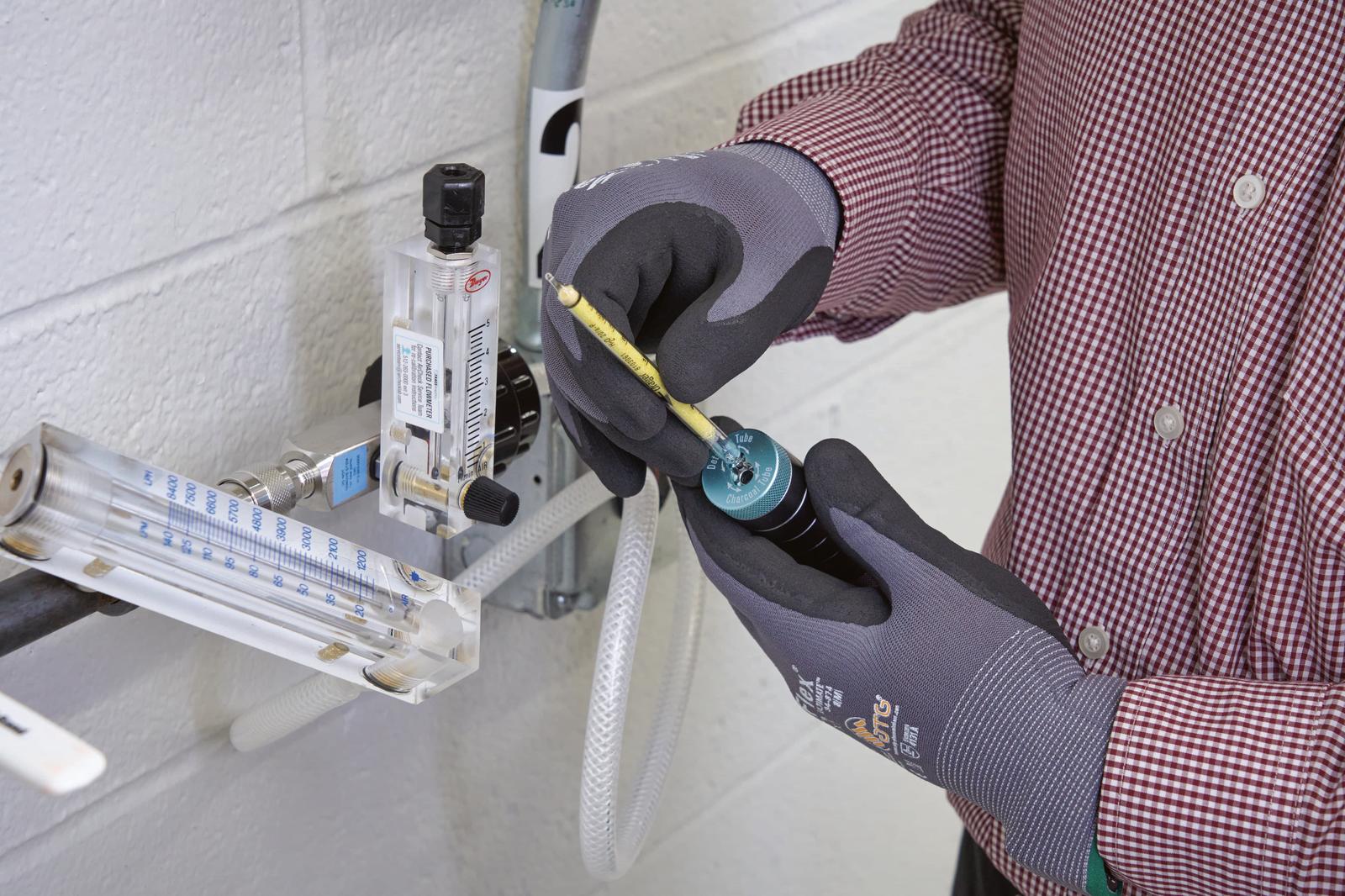
Understanding ISO 8573
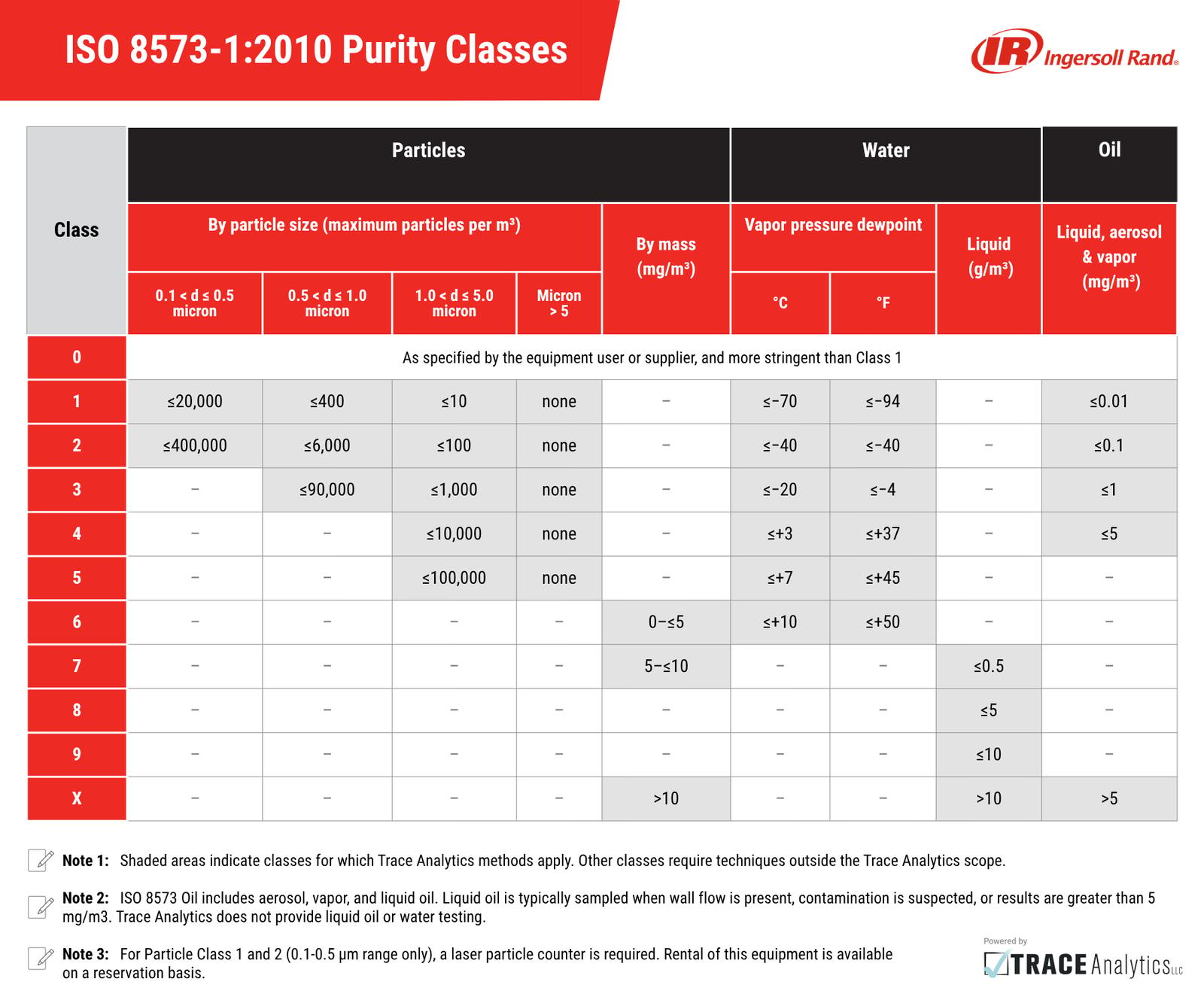
ISO 8573 is the internationally recognized air quality standard that defines major contaminants in compressed air and establishes purity classifications for particles, water, and oil. Widely used across the compressed air industry, ISO 8573 functions as a common language between manufacturers, compressed air system suppliers, and testing laboratories.
Purity classes are always reported in the order of particles, water, and oil (for example, [2:4:2]). Testing can be performed as a Baseline analysis, which reports the most stringent purity class your system currently meets, or as a PRO analysis, which tests your air against specific purity class limits your facility is required to meet. Our ISO 8573 air quality testing program gives you clear, actionable results aligned with international standards.
How Air Quality Testing Works
Step 1: Build a Testing & Monitoring Plan
Work with an Ingersoll Rand expert to determine the right ISO 8573 purity class, sampling locations, and testing frequency for your operation.
Step 2: Collect Samples
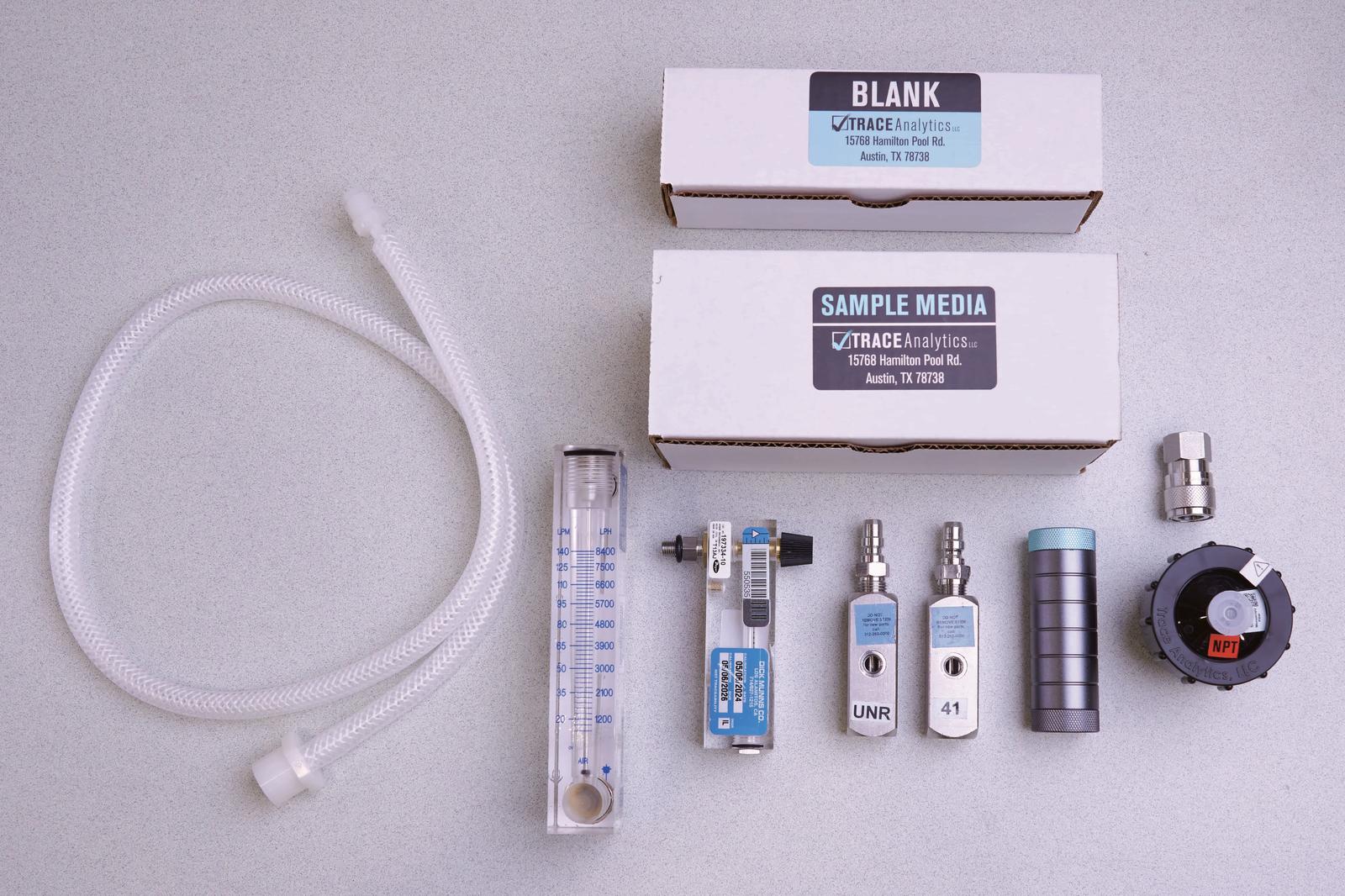
A trained technician uses the AirCheck™ Kit (K810) to collect samples as close to the point of use as possible, using sampling media and a charcoal blank for each test location.
Step 3: Lab Analysis
Samples are analyzed by Trace Analytics, LLC, an A2LA-accredited laboratory operating to ISO 17025 standards.
Step 4: Receive Results & Recommendations
Standard results are delivered in 3–5 business days (14 calendar days for microbial testing), along with support interpreting results and identifying corrective actions if needed.
Why choose Ingersoll Rand Air Quality Testing?
Accredited Testing Testing is performed by Trace Analytics, LLC, A2LA-accredited laboratory operating to ISO 17025 standards. | 35+ Years of Testing Expertise Trace Analytics has specialized in compressed air and gas analysis since 1989, analyzing hundreds of samples daily. |
Comprehensive Contaminant Analysis Testing covers particles, water, oil aerosol, and oil vapor, including oil vapor identification, a distinctive Trace Analytics capability, plus microbial and gas purity testing. | Local Ingersoll Rand Support Your local Ingersoll Rand team helps you build a monitoring plan, interpret results, and identify the right solutions if contamination is found. |
Real Results from Air Quality Testing
“Routine testing identified a malfunctioning dryer before it could compromise an entire product batch, allowing our team to complete emergency maintenance in time.”
— Pharmaceutical Manufacturer
“Testing revealed hydrocarbon contamination in our system. Working point-of-use back to the vessel, we traced it to a glove left inside during maintenance. After removal, the air passed testing.”
— Manufacturing Facility
“Microbial testing identified bacterial contamination that we traced to birds nesting and roosting near our compressor intake, allowing us to eliminate the source.”
— Manufacturing Facility
Frequently Asked Questions
ISO 8573 is the internationally recognized standard that defines compressed air purity classes for particles, water, and oil, providing a common language between manufacturers, suppliers, and testing laboratories.