REACH OUT TO US
Clean, Dry Air for Reliable Performance
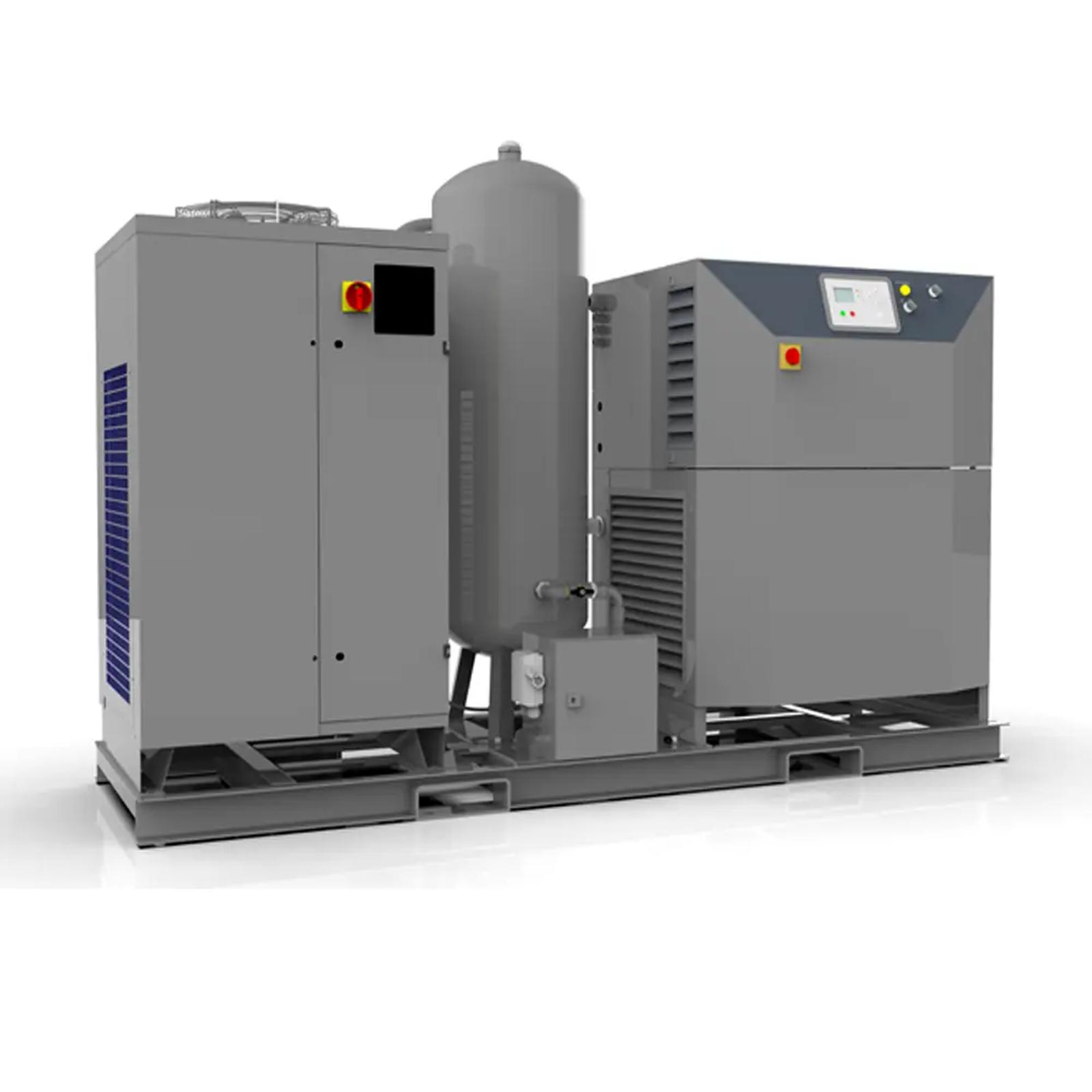
Air quality is essential for keeping your air compressor system running smoothly. Moisture and contaminants can cause costly damage and downtime. That’s why Ingersoll Rand offers a full range of air dryers—subfreezing refrigerated, desiccant, heatless, and heated systems—designed to meet your needs.
Our air compressor dryers improve air quality, boost efficiency, and help your operations run more reliably and productively.
Cycling-Refrigerated Dryers
Our cycling-refrigerated compressed air dryers deliver energy-efficient performance and reliable moisture control. Options include the compact D-EC for lower operating costs, the larger DA Series for high capacity, and a high-pressure model for demanding applications like PET applications.
For maximum efficiency, our Nirvana range offers systems with advanced thermal mass technology, maintaining ISO Class 4 air quality and a consistent 38°F dew point.

Heated Desiccant Dryers
Our Externally Heated and Heated Blower Desiccant Dryers deliver ultra-dry air with a -40°C pressure dew point for critical applications. Advanced pre- and post-filtration protects the desiccant and downstream equipment from oil and particulates, ensuring clean, reliable air.

Heatless Desiccant Dryers
Our modular heatless dryers are compact, easy to install at points of use, and simple to maintain. They dry only the air you need, saving energy and costs. These dryers deliver ISO Class 2 dew point performance, with an option for ISO Class 1 to prevent corrosion and minimize downtime, making them one of the most efficient and flexible solutions available.

Heat-of-Compression Dryers
We offer three Heat-of-Compression dryer models in different sizes and capacities. Each uses a dual-tower desiccant design for oil-free applications and maximum energy efficiency. These dryers recover heat from the compression process to offset nearly all electricity costs (except running the controller).

Non-Cycling Refrigerated Dryers
Our non-cycling refrigerated air dryers deliver clean, dry compressed air to prevent corrosion and protect air-powered tools.
Subfreezing Dryers
For extreme conditions, our SF Subfreezing dryers offer flexibility and efficiency with capacities from 360-420 m3/min (212–247 cfm). Their low-temperature operation makes them ideal for systems that have piping or pneumatic equipment exposed to subfreezing temperatures, ensuring safe and reliable performance.

Filters
We also offer our NL Module Coalescing filter and our F-Series filter, which have both been rigorously tested and engineered to reduce contamination, perform reliably and produce high-quality air consistently.

Air Compressor Dryer Comparison
| Dryer Type | How It Works | Best For | Key Features |
|---|---|---|---|
| Refrigerated Air Dryer | Cools compressed air to condense and remove moisture | General industrial applications | Energy-efficient, consistent dew point, ISO Class 4 air quality |
| Cycling Refrigerated Dryer | Uses thermal mass to cycle refrigeration for energy savings | Variable load conditions | Lower operating costs, advanced thermal technology |
| Non-Cycling Refrigerated Dryer | Maintains constant dew point at all loads | Continuous demand systems | Reliable moisture removal, minimal maintenance |
| Desiccant Dryer | Uses desiccant material to absorb moisture | Critical applications requiring ultra-dry air | Achieves -40°C dew point, ISO Class 1 or 2 performance |
| Heatless Desiccant Dryer | Purges moisture without heat, using a portion of dried air | Point-of-use, energy-conscious environments | Compact design, easy maintenance, ISO Class 2 dew point |
| Heated Desiccant Dryer | Uses external heat or blower to regenerate desiccant | Large systems or high-volume applications | Ultra-dry air (-40°C dew point), energy-efficient regeneration, advanced filtration |
| Heat-of-Compression Dryer | Recovers heat from compression process to regenerate desiccant | Oil-free compressors, energy-saving applications | Offsets electricity costs, dual-tower design, highly efficient |
| Subfreezing Dryer | Operates at very low temperatures to prevent freezing in exposed systems | Outdoor or cold environments | Maintains safe operation in subfreezing conditions, reliable performance |
Frequently Asked Questions About Air Compressor Dryers
What is an air compressor dryer and why do I need one?
An air compressor dryer removes moisture from compressed air to prevent corrosion, equipment damage, and costly downtime. Clean, dry air improves system reliability and product quality.
What’s the difference between a refrigerated air dryer and a desiccant dryer?
A refrigerated compressed air dryer cools air to condense and remove moisture, making it ideal for general industrial use. A desiccant dryer uses a drying agent to achieve ultra-low dew points for critical applications that require extremely dry air.
How does an air compressor dryer protect my system?
An air compressor dryer combines filtration and drying to remove oil, particulates, and moisture. This ensures high-quality air and protects downstream equipment from contamination.
When should I choose a heatless desiccant dryer?
A heatless desiccant dryer is perfect for point-of-use applications where space is limited and energy efficiency is important. These dryers are compact, easy to maintain, and deliver ISO Class 2 or Class 1 dew point performance.
What size air dryer do I need for my compressor?
The right air dryer depends on your system’s flow rate, pressure, and dew point requirements. Consider your application type—whether you need a refrigerated air dryer for standard use or a desiccant dryer for critical processes.