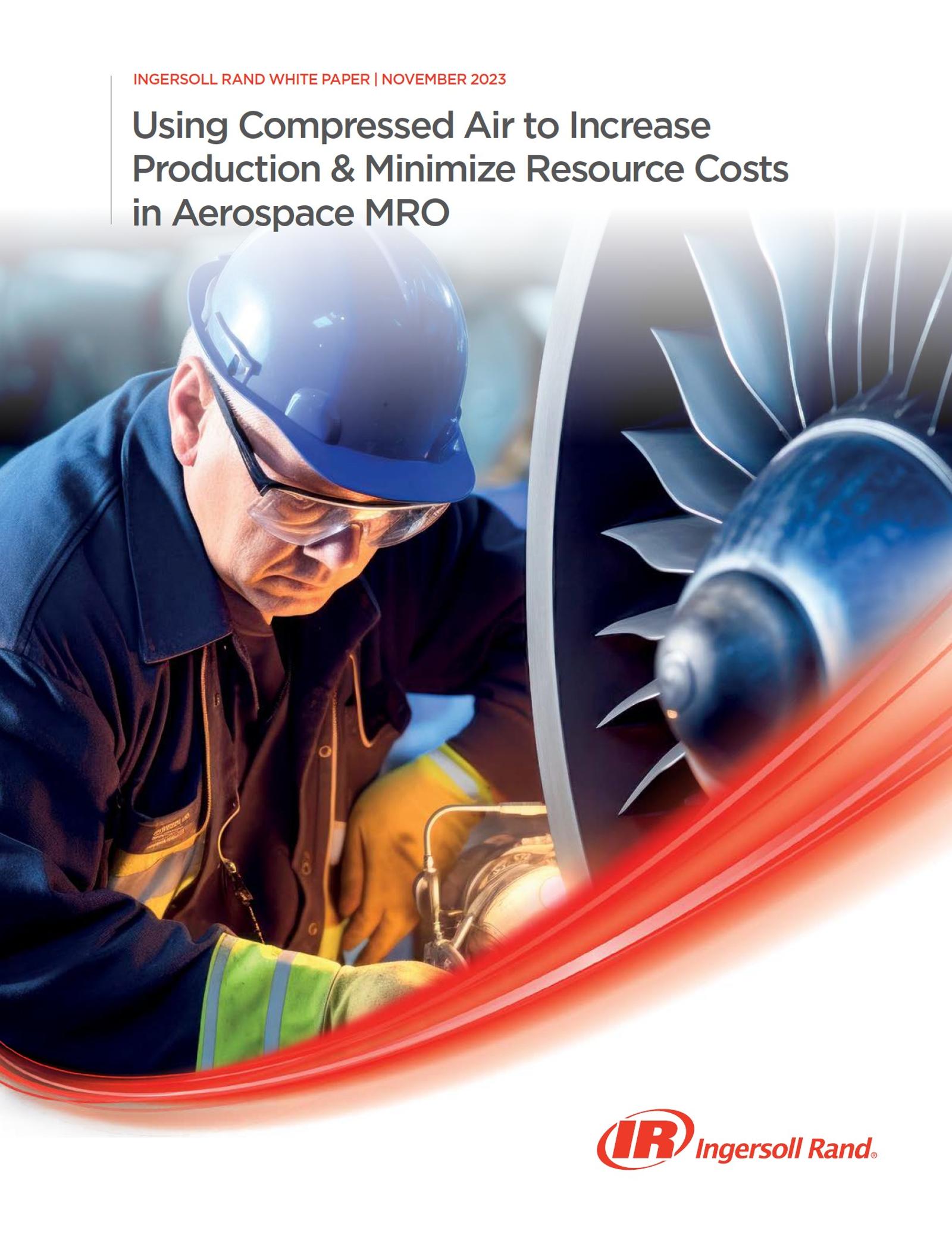
Aircraft maintenance depends on stable, clean compressed air. In aerospace MRO, compressed air systems affect throughput, safety, and operating cost across every maintenance stage. This white paper explains how Compressed Air Systems for Aerospace MRO support aircraft maintenance, repair, and overhaul activities while controlling energy use and lifecycle cost.
In compressed air in aerospace maintenance, air quality and availability directly impact pneumatic tooling, instrument air, structural testing, painting, and nitrogen generation. Moisture, dust, or unstable pressure increase rework, slow turnaround times, and raise risk in compressed air aircraft maintenance and compressed air aircraft repair operations.
Aerospace MRO facilities also face pressure to shorten maintenance windows and reduce overhead. That makes compressed air performance a system-level issue, not just a compressor choice. Failures often originate downstream, in drying, filtration, controls, or condensate handling.
Perfect IR positioning: system-level compressed air for aerospace MRO
Ingersoll Rand approaches aerospace MRO compressed air as a fully integrated system. The focus is on reliability, air purity, and predictable operating cost over the full asset lifecycle.
This system-level approach aligns six elements:
- Air audits based on real MRO demand
- Efficient compressor technologies matched to load profiles
- Downstream drying and filtration to meet aerospace air quality needs
- Controls and automation to stabilize pressure and reduce waste
- Heat recovery to reuse compression energy
- Long-term service and maintenance programs
Across aerospace MRO, compressed air supports instrument air, service air in hangars, paint booths, and air separation for nitrogen generation. Each application has different purity and pressure demands. System design and monitoring allow facilities to meet these needs without oversizing equipment or wasting energy.
The white paper shows how compressed air systems can increase aircraft throughput, protect tooling and finishes, and reduce resource costs across aerospace MRO operations.
Download the Whitepaper