
Rotating equipment and loading solutions for Biogas-to-Biomethane applications: a field guide for Project Developers, System Integrators, and OEMs
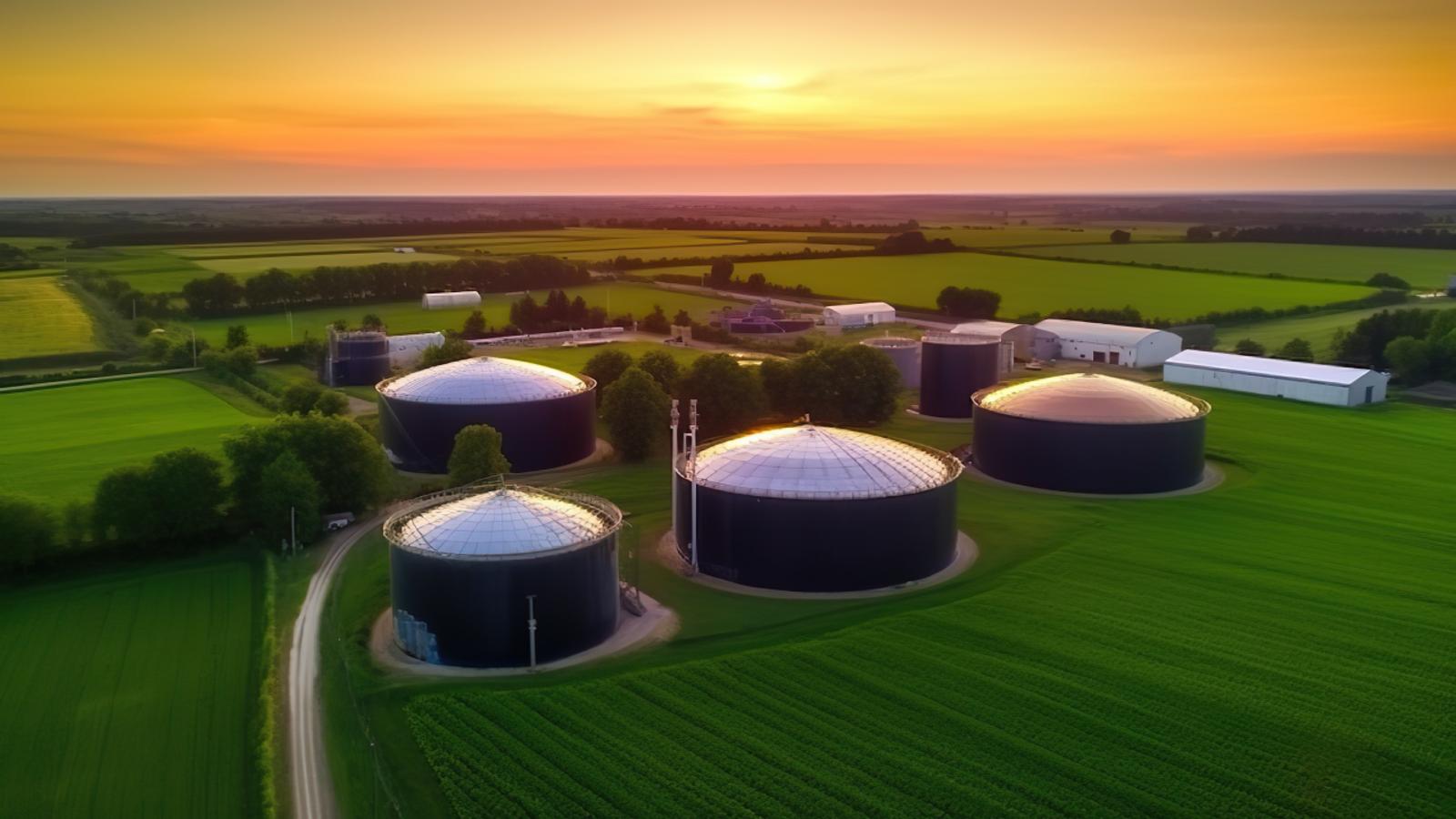
Europe’s biomethane ambition is significant—35 bcm/year by 2030 under REPowerEU—with an estimated €37 billion investment need. Sector data show ~5.2 bcm of biomethane produced in 2024, installed capacity of ~7 bcm/year by early 2025, and >1,600 operational plants—yet independent assessments still classify the 2030 trajectory as “not on track.” However, considering the latest data of 22bcm of combined biogas and biomethane production in 2025, the target seems not that unreasonable anymore. Capital deployment is essential, while policy mechanisms (e.g., RED III and the Hydrogen & Decarbonised Gas Package) strengthen the demand and integration framework. Finally, project success will ultimately be determined by engineering choices and execution quality across the value chain.
1) Market and policy context: what the numbers imply for design
- Scale and trajectory. The EU’s 35 bcm aspiration for 2030 is clear. In practice, 2024 output of ~5.2 bcm and capacity ~7 bcm/year by early 2025 imply substantial year‑on‑year additions and a premium on replicable project designs that commission reliably and meet grid‑injection or offtake specifications quickly.
- Plant network. Europe ended 2024 with 1,620 biomethane plants, adding 111 new facilities, with 165 total new projects starting around the beginning of 2025. More than 85% of them are grid‑connected, increasing the importance of standardized interfaces and telemetry.
- Not on track without acceleration. Sector trackers continue to flag the 2030 target as “not on track,” reinforcing the need for disciplined technology selection and streamlined delivery.
- Integration and incentives. RED III (binding 42.5% renewables by 2030, with an indicative 45%) and the Hydrogen & Decarbonised Gas Package (tariff discounts and integration rules for renewable gases) improve bankability for grid‑injection projects, provided technical compliance and traceability are maintained.
2) Value chain overview: process stability before performance
Feedstock handling and pre‑treatment. Heterogeneous substrates (e.g., silage, slurry, municipal organics, wastewater sludge) benefit from robust pre‑treatment: particle‑size reduction (shredders/macerators), reliable solid‑matter feeding, and abrasion‑resistant pumps matched to viscosity and solids content. Consistent feed quality reduces digester upsets and helps right‑size downstream equipment.
Digester mixing and biology. Side‑entry or vertical mixers that prevent dead zones, combined with dosing (pH/alkalinity, nutrients, anti‑foam), sustain methanogenic activity and stabilize gas quality. Reliable mixing and instrumentation simplify control logic and reduce operator interventions.
Design implication. Stable upstream operation protects downstream CAPEX and OPEX—allowing lighter‑touch compression where appropriate and extending the life of membranes/adsorbents in upgrading units.
3) Biogas cleaning and upgrading: match route to gas, site, and grid rules
Cleaning/pre‑treatment. H₂S removal, dehumidification/chilling, particulate capture, and siloxane reduction protect compressors, membranes, and adsorption media. Correct specification at this stage directly influences energy intensity and maintenance intervals.
Main upgrading routes:
- Membrane separation. Differential permeation under pressure through polymeric membranes separates CH₄ from CO₂. Typical strengths include modularity and compact footprint; feed‑gas quality (especially moisture and contaminants) should be managed to protect membranes.
- (V)PSA (vacuum pressure swing adsorption). CO₂ adsorbs onto media and is released by pressure/vacuum cycles. Proper coordination of compression and vacuum is critical; attention to residual moisture or amine carryover from upstream units is advised.
- Water scrubbing. CO₂ dissolves in water; systems can co‑remove other contaminants (e.g., SO₂, NH₃). The approach is proven and familiar but generally requires taller columns and water management.
Design implication. Select the route that fits the gas composition, space, and local tariff profile. Pre‑treatment quality, compression duty sizing, and integration logic (start‑up/shutdown, cycling) are key to meeting >97% CH₄ and grid specifications consistently.
4) Compression and vacuum: technology choices and engineering criteria
Compression and vacuum packages appear at multiple points: digester gas extraction, pre‑treatment loops, upgrading feed compression, post‑upgrade boosting for grid injection or storage, CHP feeding, and landfill‑gas recovery. Selection should consider specific energy (kWh/Nm³) over the real flow profile, turndown, contaminant tolerance, pulsation/noise, oil carryover limits, hazardous‑area certifications, footprint/civils, and serviceability.
Examples:
- Liquid ring vacuum pumps and compressors (e.g., NASH®). Applied where gas is wet/dirty/variable, or deep vacuum is required. Typical operating envelope includes vacuum down to ~33 mbar(a), compression up to ~13 barg, and large flows (~10,000–35,000 Nm³/h). The sealing liquid provides a gas‑tight chamber and carryover tolerance; compression space is inherently oil‑free.
- Side‑channel blowers (e.g., Elmo Rietschle™). Compact, oil‑free machines for low‑pressure compression or moderate vacuum—useful for CHP feed or pre‑treatment steps. Typical figures: ~1,000–2,000 Nm³/h, up to ~1 barg, vacuum to ~350 mbar(a); favorable characteristics include minimal pulsation and good VFD compatibility.
- Rotary vane gas compressors (e.g., Wittig®). Used for upgrading feed and post‑upgrade boosting to mid‑teens bar. Typical ranges: up to ~17–18 barg, ~3,000 Nm³/h; engineered‑to‑order skids or containerized packages are common. Low‑speed operation (~900–1,800 rpm) with high volumetric efficiency and strong turndown provides stable performance; ATEX variants and country approvals are available.
Selection workflow. To provide the best equipment selection it is important to specify and confirm the following data: detailed gas composition and humidity; Flow; inlet temperature/pressure; discharge pressure; acceptable oil carryover; duty cycle; noise/pulsation limits; hazardous‑area rating; filtration/cooling needs; and any country‑specific approvals (e.g., CRN).
5) Logistics and loading: when pipeline access is not available
For projects moving BioLNG or liquid CO₂, loading systems (e.g., EMCO WHEATON™) become part of the critical path.
Land loading. Top/bottom loading arms for trucks and railcars with appropriate quick‑connect/disconnect (QCDC) options and vapor return lines where required.
Marine loading. Pantograph‑balanced arms with hydraulic power units designed around pressure/temperature envelopes rather than molecule type.
Main features include:
- Emergency Release System (ERS). Provides controlled separation beyond the safe‑working envelope—a key safeguard against jetty/vessel damage and extended downtime.
- QCDC families. Manual through cryogenic variants; high‑pressure QCDC options exist for relevant services.
- Cryogenic design and testing. Stainless‑steel arms with structural support to accommodate thermal contraction; factory cold tests with liquid nitrogen (–196 °C) validate separation under ice conditions.
- Maintainability. In‑situ seal replacement, position monitoring, and purge/drain provisions; designs follow applicable marine codes (e.g., OCIMF/ISO).
Design implication. Early specification of ERS and QCDC mitigates operational and schedule risk in non‑pipeline logistics chains.
6) Commercial and ROI levers: where engineering decisions affect returns
Uptime and time‑to‑gas. Integrated packages (e.g., compressor + filtration + cooling + controls on a single skid or containerized module) reduce interfaces and commissioning risk. Cross‑equipment interoperability and a unified service model simplify root‑cause analysis and maintenance scheduling.
Energy intensity. Selection should be based on kWh/Nm³ over the actual flow profile—not a single rating point. Variable‑frequency drives (VFDs) enable turndown without blow‑off, reducing operating cost.
Grid access. Where pipeline injection is feasible, the Hydrogen & Decarbonised Gas Package provides for tariff discounts (up to 100% for renewable gases) under defined conditions; this can materially improve project economics when combined with reliable metering and gas‑quality control.
Traceability and offtake. Corporate buyers increasingly require Guarantees of Origin and Proof of Sustainability; the EU’s Union Database enhances mass‑balance traceability for renewable gases, supporting cross‑border claims and facilitating offtake agreements.
Policy durability. RED III’s binding EU‑wide target for renewable energy by 2030 provides long‑term context for renewable gas demand and supports investment horizons that extend beyond single‑sector use cases.
7) Role of a one‑stop partner
Conclusions
Europe’s biomethane scale‑up will be determined by consistent engineering and disciplined execution: stable front‑end biology, appropriate upgrading pathways, fit‑for‑duty compression and vacuum, and traceability that withstands audits. With clearer incentives and integration rules in place, the emphasis shifts to delivery.
If you are evaluating pilots or preparing specifications and would like to discuss engineered‑to‑order or containerized packages for compression, vacuum, blowers, or loading systems, feel free to connect for pilots / RFQs (also through our website). We can review duty points, outline configuration options, and structure a path to commissioning with defined performance metrics.
REACH OUT TO US